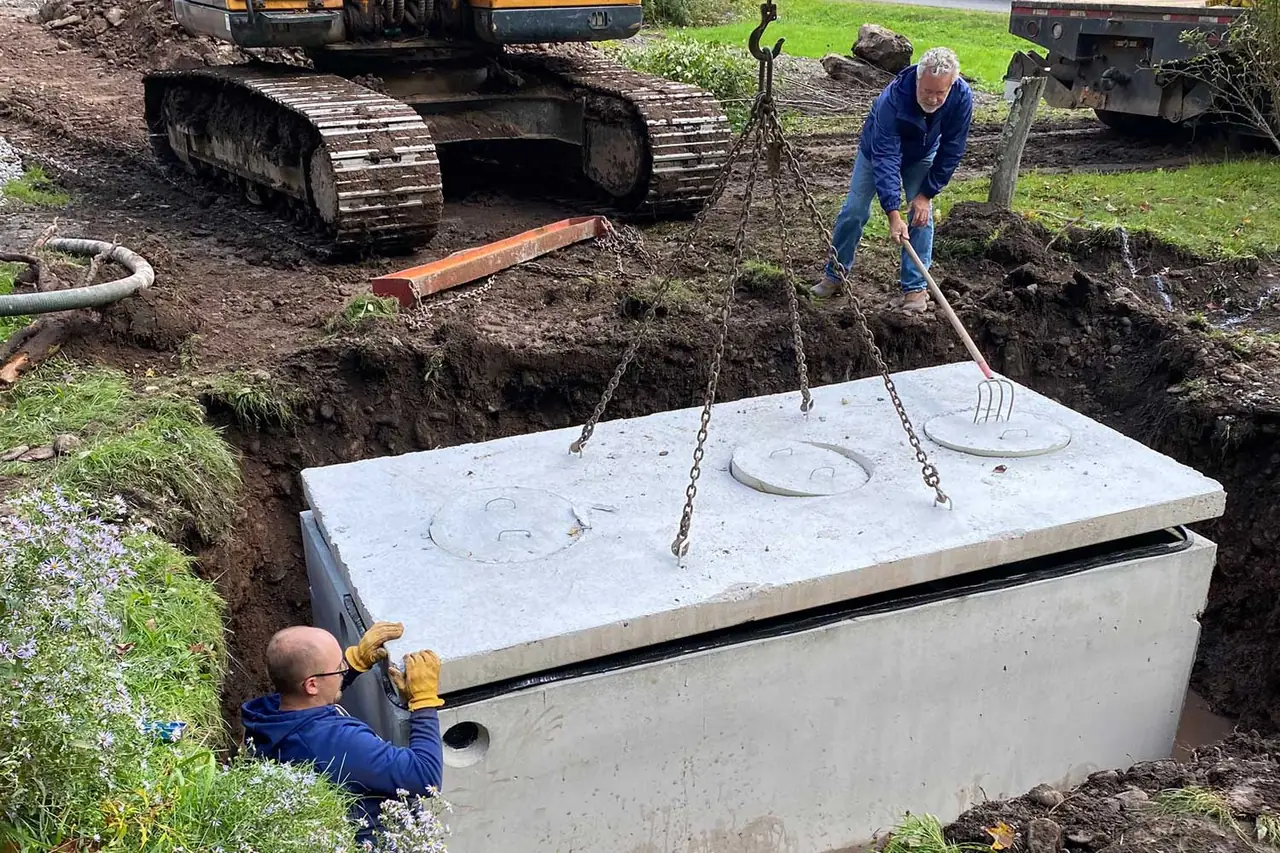
How Much Does Septic Tank Replacement Cost in Alabama?
The Septic Guide’s March 2026 cost guide puts a tank-only replacement at $3,000 to $7,000. HomeAdvisor’s 2025 data puts replacing a septic tank at $3,000 to $10,000. Whether the drain field still works, and what Alabama requires of a replacement, move the number most.
The Septic Guide’s March 2026 guide puts a complete tank and drain field replacement at $8,000 to $20,000 or more. These are published market ranges, and your number comes from a look at your own lot. Our crews handle septic system replacement across Northeast Alabama, and every estimate is free.
What does septic tank replacement cost at each level?
The price starts with how much of the system has to go. The Septic Guide’s March 2026 repair cost guide prices three levels of replacement, and HomeAdvisor prices the tank job.
| Level of replacement | Published range | Cost guide |
|---|---|---|
| Tank only, on a drain field that still works | $3,000 to $7,000 | The Septic Guide, March 2026 |
| Septic tank replacement | $3,000 to $10,000 | HomeAdvisor, 2025 data |
| Drain field only, on a sound tank | $5,000 to $15,000 | The Septic Guide, March 2026 |
| Complete system, tank and drain field | $8,000 to $20,000 and up | The Septic Guide, March 2026 |
The Septic Guide’s installation guide lists the same tank-only range. It says that range covers the new tank, the connections and decommissioning the old tank. HomeAdvisor says a tank replacement costs less than a new system because the excavation is already done.
The Septic Guide adds that when the drain field is healthy, replacing just the tank saves thousands. When the field has failed too, the job moves to the complete system row. Our drain field replacement cost guide covers the field side line by line.
What goes into the price of a new septic tank?
A replacement quote stacks several lines. The Septic Guide’s March 2026 installation cost guide prices the main ones.
| Line item | Published range | Cost guide |
|---|---|---|
| 1,000 gallon concrete tank | $800 to $1,500 | The Septic Guide, March 2026 |
| 1,000 gallon plastic tank | $500 to $1,200 | The Septic Guide, March 2026 |
| 1,000 gallon fiberglass tank | $1,200 to $2,000 | The Septic Guide, March 2026 |
| Excavation and site prep | $1,000 to $4,000 | The Septic Guide, March 2026 |
| Rock removal, when the dig hits bedrock or large boulders | $1,000 to $5,000 | The Septic Guide, March 2026 |
| Decommissioning the existing system | $500 to $2,000 | The Septic Guide, March 2026 |
The Septic Guide says concrete is the most common tank. It calls the tank itself a relatively small portion of the total cost. The same March 2026 guide says labor accounts for 50 to 70 percent of the total installation cost.
The Septic Guide also says many contractor estimates leave the decommissioning cost out of the first quote. Ask whether the old tank is in yours. Permit fees are not in the table, so check with the county health department for the current amount.
When does a septic tank need replacing instead of repair?
The Septic Guide’s March 2026 repair guide gives three reasons to replace a tank:
- Major structural failure, meaning large cracks, shifting or collapse
- A tank that is undersized for the home because bedrooms were added
- Tank material at the end of its life, steel tanks especially
Steel has a firm answer in Alabama. The state’s rules do not allow metal tanks, drums, barrels or pipes as sewage tanks. Size has a rule too, because Alabama sizes a home’s septic tank by its bedroom count.
Some tank problems are smaller jobs than a new tank. ADPH counts a new lid, baffle, inlet or outlet fixture as maintenance, with no Permit to Repair needed. That work falls under septic tank repair.
The Septic Guide’s 50 percent rule helps with close calls. If a repair would cost more than half of a replacement, replacement is usually the better investment. Our post on how to tell a repair from a replacement covers the signs. A septic inspection shows the condition of the tank before you choose.
Can you replace just the tank, or does the whole system go?
Yes, if the drain field is healthy. The Septic Guide says a tank-only replacement reuses the existing drain field if it still works. Alabama’s rule allows it too. Parts of the old system that are operationally sound may stay in the repaired system.
The paperwork follows the scope. Alabama’s rule calls the work a repair when the flow and waste strength have not changed. ADPH says a septic tank can be replaced on a verbal permit from the county health department to the installer.
That route applies when the county can find the system’s Approval for Use. Without that record, a signed application goes in first, and a Permit to Repair issues before the swap. ADPH also lists a third route: a waiver of the Permit to Repair, signed and notarized by the owner and signed by the installer. With a waiver, the repair work is not inspected and no Approval for Use is issued. A repair does not need an additional replacement field area.
The whole system goes when the field has failed as well. ADPH says that when every component has to be replaced, the job is a replacement rather than a repair. It then follows the permit requirements for a new system. A failing field on a sound tank is drain field repair work instead.
What does Alabama require when a whole system is replaced?
Alabama’s onsite sewage rules, Chapter 420-3-1 of the Alabama Administrative Code, set the steps. A replacement system is considered a new system and has to meet all current rules. No install or repair may begin until the county health department issues a Permit to Install (Repair).
For a new system, the soil tests are certified before that permit issues. The tank is sized by the home’s bedroom count. The lot has to hold the new field plus a 100 percent replacement field area. That is an area set aside in case the field must be replaced, not a second field.
Inspection and timing have rules too. Nothing is covered or used until the county health department has had the chance to inspect it. The county has 28 calendar days from the application to issue the permit or give the reason it cannot.
ADPH tells homeowners to make sure the installer is licensed by the Alabama Onsite Wastewater Board (AOWB). Our guide to Alabama septic permits and perc tests covers the soil side of the process.
What happens to the old septic tank?
Rule 420-3-1-.24 covers the old tank. An abandoned tank is pumped out by a pumper licensed by the Alabama Onsite Wastewater Board. The empty tank may then be removed at the property owner’s option, or to make room for new system parts.
If nothing new goes in that spot, the hole is filled with sand or soil. A tank left in the ground is also filled with sand or soil. The rule says its bottom may be ruptured.
The decommissioning line in the table above is The Septic Guide’s published range for this step. Old tank removal and abandonment are part of our replacement work.
What drives septic tank replacement cost in Northeast Alabama?
Scope comes first. A new tank on a working drain field sits at the low end of the ranges above. A full system sits at the top.
Bedroom count comes next. A house that gained bedrooms may need a bigger tank than the one in the ground.
For a new system, the soil test and site evaluation decide the system type. Every proposed site in Alabama is rated on six factors, including slope and depth to bedrock. The most limiting factor decides whether the site takes a conventional system or an engineered one. A drain field site steeper than 25 percent needs an engineer design.
The Septic Guide’s March 2026 installation guide says a site that fails the perc test needs an engineered alternative. That alternative costs $5,000 to $15,000 more than a conventional system, The Septic Guide says. Lots like that need an engineered septic system.
Rock and access move the digging cost. The Septic Guide says excavation depends on soil conditions, slope and access. For what a brand-new system runs, see our guide to what a new septic system costs in Alabama.
How long does a new septic system last?
Alabama Cooperative Extension says a properly installed and maintained septic system can last 20 to 30 years. Both halves of that sentence count: the install and the care after it. Our septic tank maintenance page covers the care side.
Is there help paying for a septic replacement?
EPA’s septic funding page lists USDA’s Single-Family Housing Repair Loans and Grants program. It offers low-interest loans to repair, improve or modernize rural single-family homes. Its grants go to elderly very-low-income homeowners to remove health and safety hazards, septic systems included. EPA’s page links to the program fact sheet.
How do you get a real number for your septic tank replacement?
Every range above comes from a published cost guide, and your lot sets the final number. The company holds the Alabama Level II (advanced) onsite wastewater installer license. That state level covers engineered and large commercial onsite systems as well as conventional ones.
Our three crews dig with the company’s own excavation equipment, and decades of septic installs sit behind the company. In Alabama, we handle the permit with the county health department.
We work across Northeast Alabama and Northwest Georgia. We look at the old system and the lot, then quote the job for free. Call (256) 453-9003 or request a free estimate.